

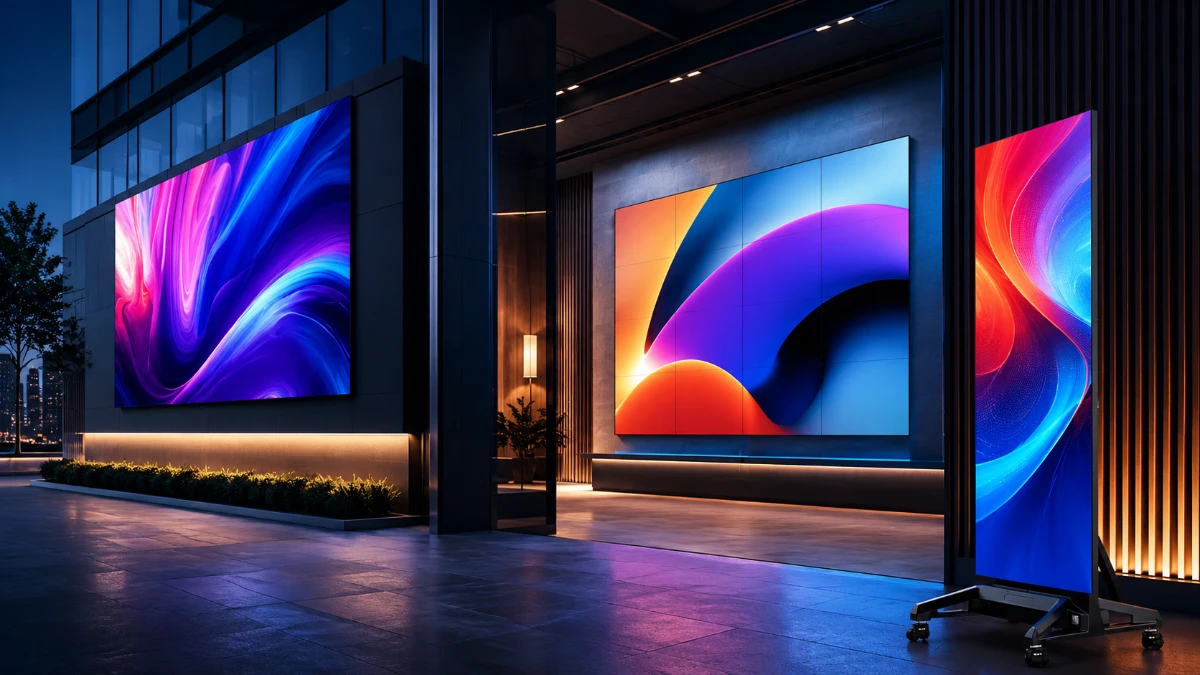
An LED screen used on a building façade is different from one installed inside a meeting room. A display used for retail promotions is different from a screen built for conferences or outdoor events. Each use has its own requirements, and understanding these requirements early helps avoid poor visibility, unnecessary cost, or a screen that does not fit the space.
This guide explains the main factors to consider before choosing an LED screen for your project, including installation location, viewing distance, lighting conditions, content type, and daily use.
The first factor to consider is where the screen will be installed. Indoor and outdoor environments require different screen specifications, different levels of brightness, and different installation considerations.
Indoor LED screens are commonly used in malls, retail stores, hotels, restaurants, cafés, showrooms, meeting rooms, reception areas, and exhibition spaces. Since viewers are usually closer to the screen indoors, image clarity and detail become especially important.
Indoor spaces also allow better control over lighting. This means the screen does not always need extremely high brightness. In fact, choosing a screen that is too bright for an indoor space may make viewing uncomfortable. The goal is to select a display that looks clear, balanced, and suitable for the environment.
Design also matters indoors. The screen may become part of the interior, whether it is placed behind a reception desk, inside a store, on a conference wall, or within a hospitality space. For this reason, the location, height, frame, viewing angle, and relationship with the surrounding design should all be studied before installation.
Outdoor LED screens are used for building façades, commercial fronts, outdoor advertising, event spaces, entrances, and open areas. These screens must handle stronger light, longer viewing distances, weather exposure, dust, heat, and changing conditions throughout the day.
When choosing an outdoor LED screen, brightness is one of the most important considerations. The screen must be visible in daylight, especially if it faces direct sunlight or sits in an open area. At the same time, it should display content comfortably at night without appearing too harsh.
Outdoor screens also require careful attention to structure, mounting, protection level, maintenance access, and long-term performance. A large outdoor screen may be highly visible, but size alone is not enough. It must be suitable for its location and clear for the audience it is meant to reach.
Every project has its own spatial conditions. Some screens are installed on straight walls. Others are placed on glass façades, curved surfaces, columns, temporary stages, or narrow retail areas. These details affect the type of LED screen that should be used.
For a simple wall installation, a fixed LED screen may be suitable. For glass storefronts, a transparent LED screen may help display digital content while keeping the openness of the façade. For columns, circular shapes, or curved architectural elements, flexible LED screens may be more appropriate. For events and exhibitions, rental LED screens may offer better flexibility in installation and removal.
A good LED solution should feel connected to the place. It should support the purpose of the space, respect its layout, and make the content easy to see. Choosing a screen without studying the site can lead to problems in viewing angles, installation, maintenance, or overall appearance.
Viewing distance plays a major role in selecting the right LED screen. The closer the viewer is to the screen, the more important image detail becomes. In these cases, the screen usually needs a finer pixel pitch so that text, images, and videos appear smooth and clear.
For example, a screen inside a retail store or a meeting room will be viewed from a short distance. It should therefore provide clear details and comfortable viewing. On the other hand, a screen installed on a building façade or above a large entrance may be viewed from a much longer distance. In that case, the screen can use a different specification while still delivering a clear message.
Before choosing a screen, it is important to know where the audience will stand, walk, sit, or pass by. Will people view the screen from a close corridor? From cars on a road? From seats inside a hall? From an open plaza? These questions help define the right screen type and avoid choosing specifications that are either too limited or unnecessarily high for the actual use.
Lighting has a direct effect on screen visibility. A display that looks excellent in a controlled indoor environment may not be suitable for a bright outdoor location. Likewise, a very bright outdoor-grade screen may not be comfortable inside a small space.
Indoor spaces usually require moderate brightness, especially in areas such as meeting rooms, stores, hotel lobbies, restaurants, and cafés. Outdoor locations, however, often require higher brightness to keep the content visible during the day.
It is useful to study the location at different times. Some sites receive strong morning sunlight. Others are affected by reflections from glass or surrounding buildings. Indoor spaces may have strong artificial lighting or dim ambient light. Understanding these conditions helps select a screen that performs well in real use, not only on paper.
The content you plan to display is another key factor. A screen used for videos and high-quality visuals needs different considerations from a screen used mainly for text, announcements, directions, or simple promotions.
If the screen will show video content, product visuals, brand campaigns, or motion graphics, image quality, contrast, color performance, and refresh behavior become important. If the screen will show text, schedules, menus, prices, or wayfinding information, readability is the main priority. The font size, contrast, and viewing angle must support easy reading.
For conferences and presentations, the screen should make slides, charts, and speaker content clear for the audience. For retail stores, the screen may need to attract attention quickly and support frequent content updates. For events, it may need to be visible from different parts of the venue and support live video or branded backgrounds.
Before selecting the screen, define the content clearly. Will it be video? Still images? Text? Menus? Product promotions? Live feeds? Event branding? The answer will guide the technical and design choices.
How the screen will be used over time is just as important as where it will be installed. A permanent screen on a façade has different needs from a screen used for a three-day event. A retail display that changes content daily is different from a screen used mainly for presentations.
For permanent installations, stability, maintenance access, and suitability for long operating hours should be considered. For stores and restaurants, content management and ease of updates may be important. For events, the screen should support fast setup, safe installation, and flexible sizing. For corporate spaces, clean integration with the room and reliable performance may be the priority.
This is why choosing an LED screen should not be based only on product specifications. It should be based on how the screen will actually work in the project.
The right LED screen starts with a clear understanding of the project. Where will the screen be installed? Who will see it? How far will they be from it? What type of content will it display? How bright is the location? Will the screen be permanent or temporary?
When these questions are answered, the choice becomes much more accurate. The screen can then serve the space properly, present the message clearly, and support the project’s purpose, whether it is installed in a mall, store, hotel, airport, exhibition, conference hall, restaurant, or outdoor façade.
If you are planning an LED screen for your project, Ultra View can help you study the location, understand the requirements, and choose a solution that fits the space, content, and intended use.